Introducing AnswerAtlas: Shopify AI Search Optimization for catalogs
AnswerAtlas is a Shopify AI Search Optimization app that helps Shopify teams make product catalogs easier for AI search systems to read, summarize, and measure.
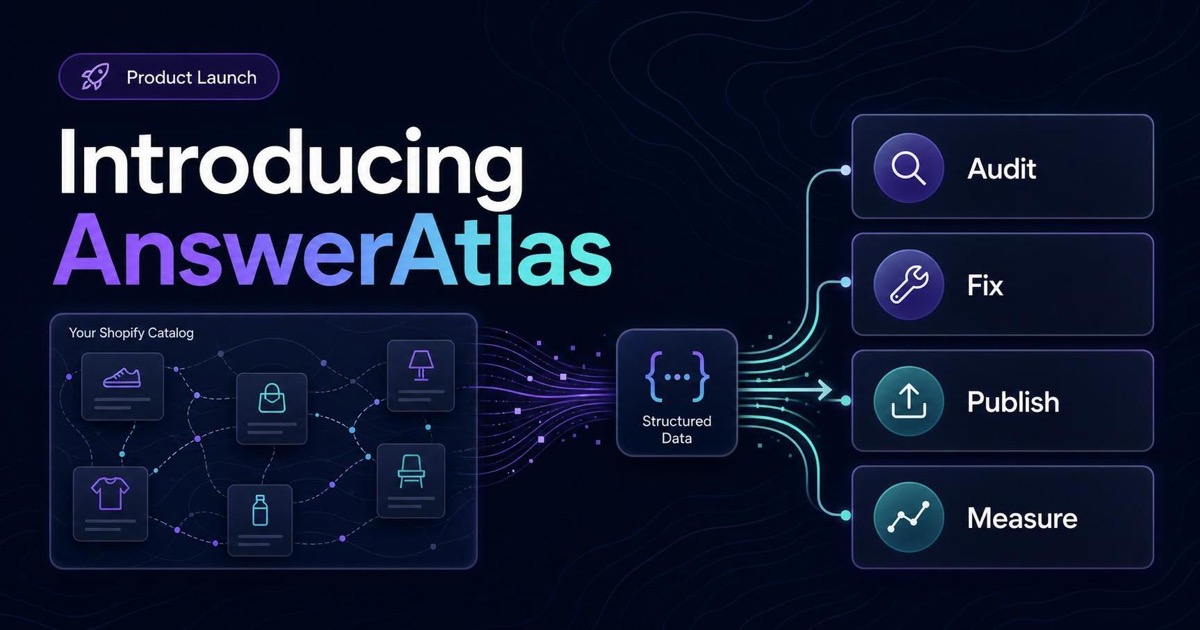
AnswerAtlas is a Shopify AI Search Optimization app for Shopify teams that want their products to be easier for AI search systems to understand. Traditional SEO still matters, but AI answers often rely on clean product data, consistent descriptions, structured signals, and pages that are simple to summarize. The app is available on the Shopify App Store.
The app focuses on AI Search Optimization for ecommerce catalogs: audit what AI systems can read, identify weak product signals, publish clearer machine-readable context, and measure early visibility signals without promising guaranteed citations or rankings.
Why Shopify stores need AI Search Optimization
Shopify stores already manage titles, descriptions, collections, variants, inventory, schema, reviews, and landing pages. The challenge is that these signals are often fragmented. A human shopper can compare tabs and infer context, but an AI search system needs clear, consistent, crawlable information.
AnswerAtlas treats the product catalog as the source of truth. Instead of asking teams to write generic blog content first, it starts with the product pages that should be discoverable, understandable, and useful when AI systems summarize buying options.
What AnswerAtlas helps teams inspect
- Catalog readability: whether product names, descriptions, variants, and collection context explain what the product is and who it is for.
- Structured data coverage: whether product schema and page metadata give crawlers consistent facts.
- AI crawler readiness: whether important pages are easy to crawl and do not hide key product context.
- Content gaps: where thin product descriptions, missing comparisons, or unclear benefits make the catalog harder to summarize.
- Measurement signals: where teams can begin watching crawler activity, AI referrals, and readiness changes over time.
The product loop: audit, fix, publish, measure
AnswerAtlas is organized around a simple loop for operators and growth teams.
First, run an audit to find weak AI-readiness signals across important product pages. Next, fix the highest-impact issues in product copy, structured data, and catalog context. Then publish crawler-friendly assets such as clearer page content and future llms.txt support. Finally, measure how readiness and visibility signals change over time.
This loop is designed to be practical for small teams. It avoids vague AI-search theory and focuses on the product data merchants can actually improve.
What makes AnswerAtlas different from generic SEO tooling
Most SEO tools are built around keywords, backlinks, rank tracking, and search result pages. Those workflows are still useful, but they do not fully answer whether a product catalog is easy for AI systems to read and cite accurately.
AnswerAtlas narrows the focus to Shopify catalog readiness. That means product-level checks, merchant-friendly recommendations, and a clear audit path before advanced workflows such as Supabase-backed content operations, editorial programs, or deeper analytics are added.
A practical starting checklist
- Pick the top product pages that matter most for revenue or launch momentum.
- Check whether each page clearly explains the product, audience, use case, and differentiators.
- Confirm that product schema and metadata match the visible page content.
- Identify missing comparisons, FAQs, or buying-context details that an AI answer may need.
- Create a repeatable audit cadence instead of treating AI search as a one-time content project.
What comes next
The first public AnswerAtlas content hub will share practical guides on Shopify AEO, product schema, llms.txt, AI crawler visibility, and measuring AI-search readiness. The goal is to help merchants understand the work before they automate it.
If you want to start with your own store, visit the AnswerAtlas Shopify App Store listing to install the approved app and open the Free plan.
Next step
See how AI-readable your Shopify catalog is.
AnswerAtlas can scan product pages for AI-readiness signals such as structured data, catalog clarity, and crawler-friendly content.
Open Shopify App Store listing